



Foundation Engineering for Lunar and Martian Structures
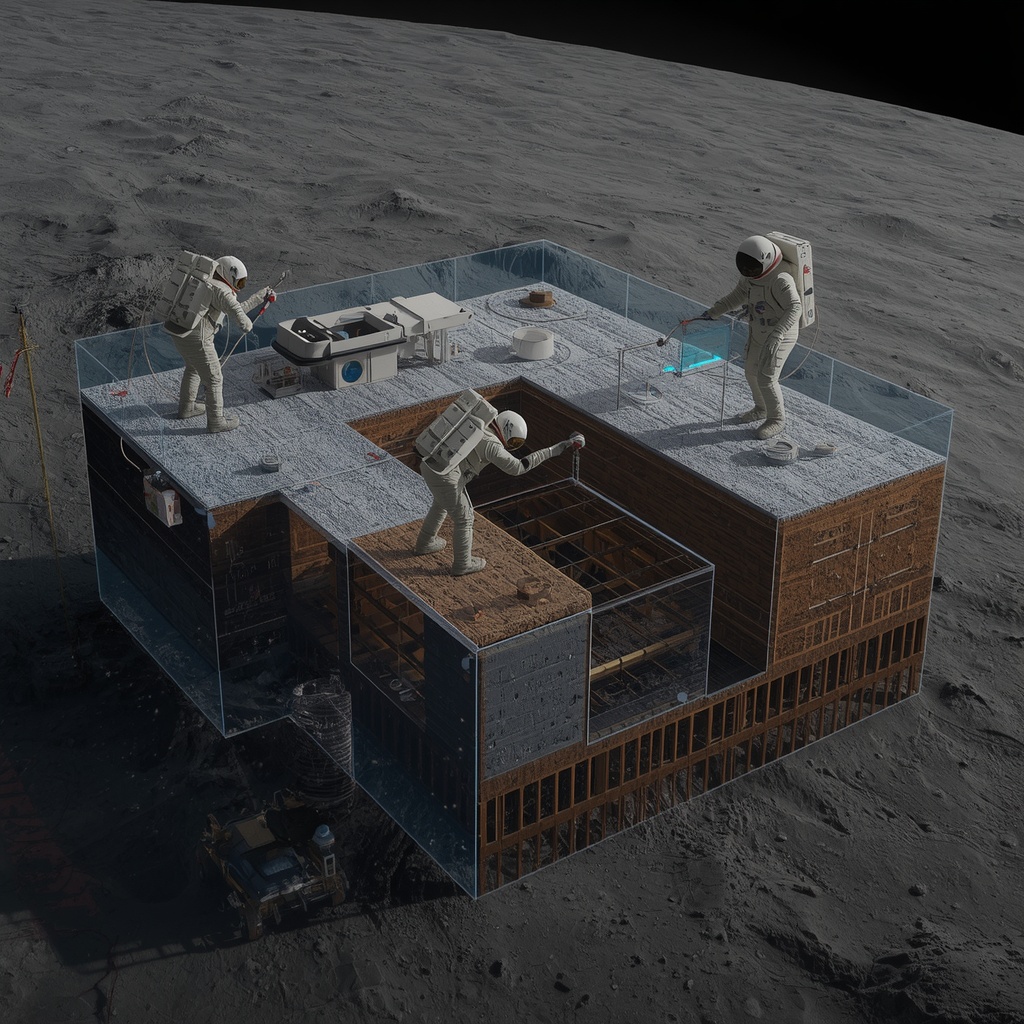
Foundation Engineering for Lunar and Martian Structures
Foundation engineering is one of the most critical disciplines in Space Geotechnics. Every habitat, landing pad, power station, research facility, and transportation system constructed on the Moon or Mars requires a stable foundation capable of safely transferring structural loads to the underlying regolith.
Unlike Earth, extraterrestrial foundation engineering must account for reduced gravity, unique regolith properties, extreme temperature variations, vacuum or low atmospheric pressure, and the absence of conventional construction materials. These factors require innovative engineering approaches that differ significantly from traditional terrestrial foundation design.
Why is Foundation Engineering Important?
Proper foundation design is essential for ensuring the long-term stability, safety, and serviceability of lunar and Martian infrastructure.
- Supports habitats and life-support systems
- Provides stability for landing pads
- Prevents excessive settlement
- Maintains structural alignment
- Improves infrastructure durability
- Enhances safety during repeated launch and landing operations
Foundation Challenges on the Moon
The Moon presents several unique geotechnical challenges for foundation engineering. Lunar regolith consists of highly angular particles produced by billions of years of meteorite impacts. The absence of an atmosphere and moisture results in soil behavior that differs significantly from terrestrial conditions.
Engineers must consider:
- Low gravity (approximately one-sixth of Earth's)
- Highly abrasive regolith particles
- Large temperature fluctuations
- Dust accumulation
- Variable regolith thickness
- Dynamic loads from spacecraft landings
Foundation Challenges on Mars
Martian foundation engineering involves additional complexities, including lower gravity, wind-driven surface processes, seasonal temperature changes, subsurface ice, volcanic deposits, and heterogeneous regolith layers. Future foundations must also withstand long-term environmental exposure while supporting permanent human settlements.
- Basaltic regolith
- Subsurface ice
- Dust storms
- Perchlorate-rich soils
- Differential settlement
- Thermal cycling
Types of Foundations for Space Infrastructure
Future lunar and Martian infrastructure may employ several foundation systems depending on structural requirements and local ground conditions.
- Shallow foundations
- Raft foundations
- Footings
- Deep foundations (future concepts)
- Anchored foundation systems
- Inflatable habitat foundations
- 3D-printed foundation platforms
Design Considerations
Foundation design for extraterrestrial environments requires evaluation of multiple geotechnical parameters.
- Bearing capacity
- Settlement behavior
- Shear strength
- Density and porosity
- Load distribution
- Thermal effects
- Dynamic loading
- Seismic response
Advanced Construction Technologies
Emerging technologies are expected to transform foundation engineering beyond Earth. Robotic construction systems, autonomous excavation equipment, additive manufacturing, and In-Situ Resource Utilization (ISRU) techniques will enable the construction of stable foundations using locally available regolith.
- Autonomous construction robots
- Regolith compaction systems
- Microwave sintering
- 3D printing with regolith
- ISRU-based construction materials
- AI-assisted structural monitoring
Future Outlook
As international space agencies prepare for permanent lunar bases and future human missions to Mars, foundation engineering will become one of the most important disciplines in extraterrestrial construction. Continued research into regolith behavior, bearing capacity, settlement, and innovative construction technologies will enable safe, resilient, and sustainable infrastructure beyond Earth.
Related Topics
- Geotechnical Site Investigation on the Moon and Mars
- Bearing Capacity of Lunar and Martian Regolith
- Lunar Regolith
- Martian Regolith
- Ground Improvement Techniques
- Landing Pad and Surface Infrastructure Design