



Excavation and Trenching in Lunar and Martian Regolith
Excavation and Trenching in Lunar and Martian Regolith
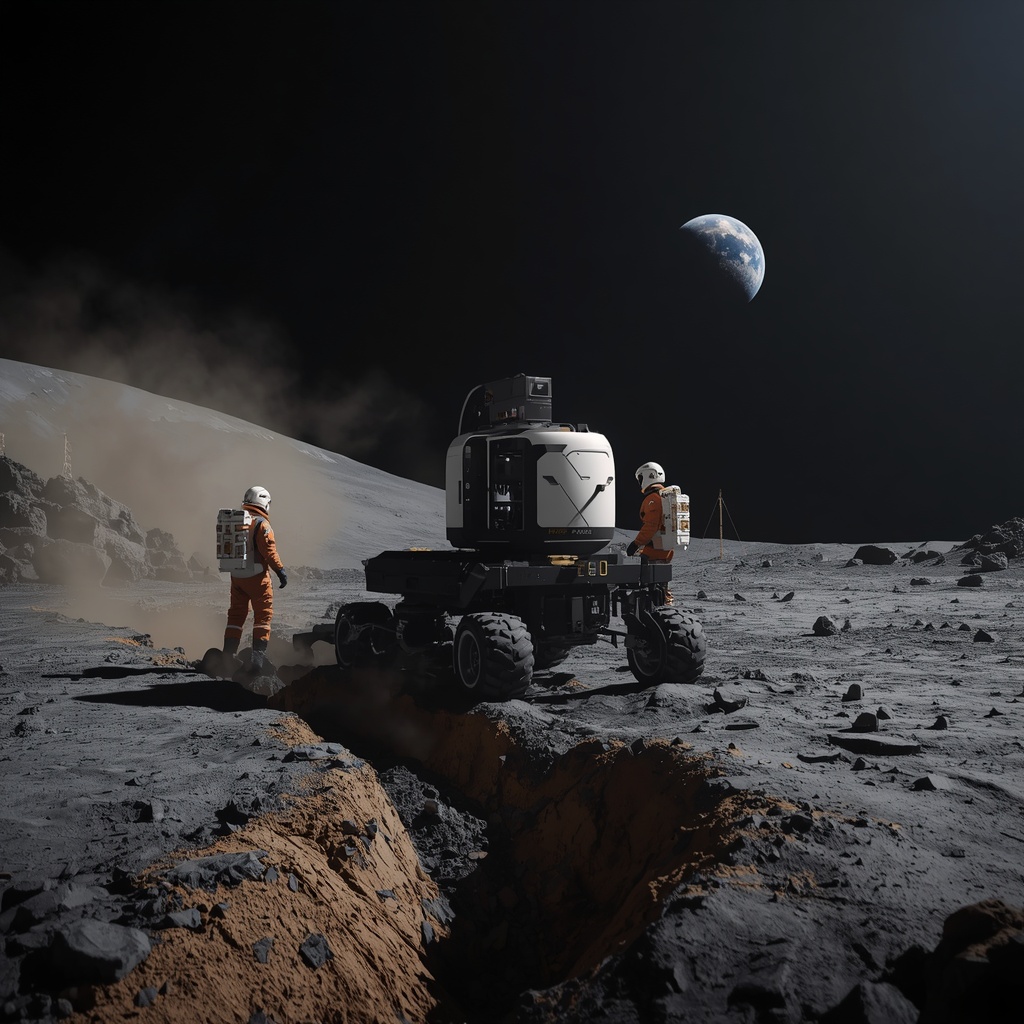
Excavation and trenching are fundamental operations for future lunar and Martian exploration. They enable the construction of habitats, utility corridors, landing pads, underground shelters, and In-Situ Resource Utilization (ISRU) facilities. However, excavating extraterrestrial regolith presents unique engineering challenges due to reduced gravity, highly abrasive soil particles, unpredictable subsurface conditions, and limited reaction forces available for lightweight robotic systems.
Unlike terrestrial excavation, where heavy machinery relies on its own weight to generate traction, lunar and Martian excavators must operate efficiently under low-gravity conditions while minimizing power consumption and maintaining stability.
Why Excavation is Important
Excavation is essential for nearly every stage of extraterrestrial infrastructure development.
- Habitat foundation preparation
- Landing pad construction
- Utility trench installation
- ISRU resource extraction
- Underground shelter development
- Scientific sampling
- Road and transportation infrastructure
Challenges of Excavating Lunar and Martian Regolith
Lunar and Martian regolith behaves differently from terrestrial soils. Low gravity reduces available traction, while highly angular particles increase cutting resistance and accelerate wear on excavation tools.
- Reduced gravity
- Limited vehicle traction
- High soil shear strength
- Abrasive dust particles
- Unknown subsurface conditions
- Extreme temperature variations
Excavation Force Reduction Techniques
Researchers have proposed several methods to reduce excavation resistance and improve excavation efficiency on planetary surfaces.
- Pre-ripping compacted regolith
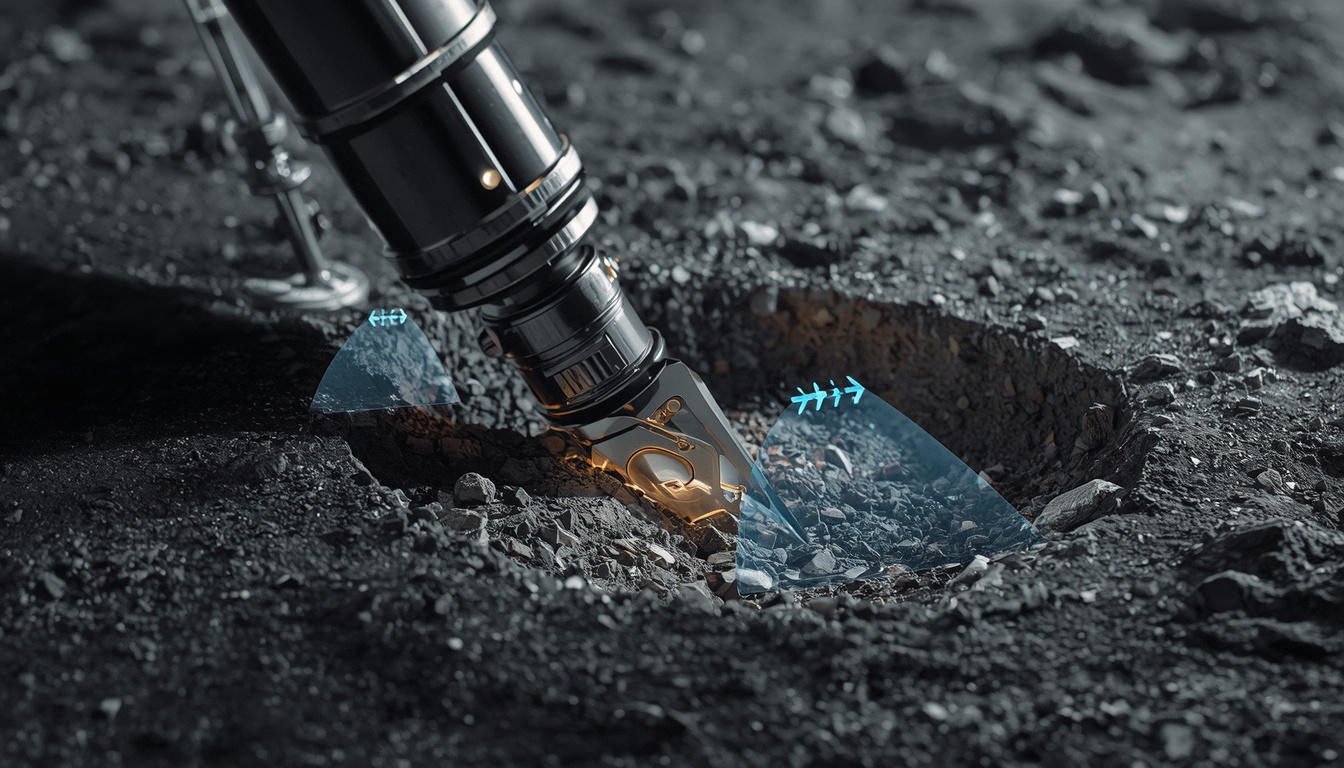
- Vibrating cutting blades
- Percussive excavation systems
- Pneumatic excavation technologies
- Shallow cutting angles
- Continuous bucket-wheel excavation
Experimental studies have shown that vibrating cutting tools can reduce excavation forces by up to 50%, while percussive systems may decrease required excavation forces by an order of magnitude compared with conventional excavation methods.
Robotic Excavation Systems
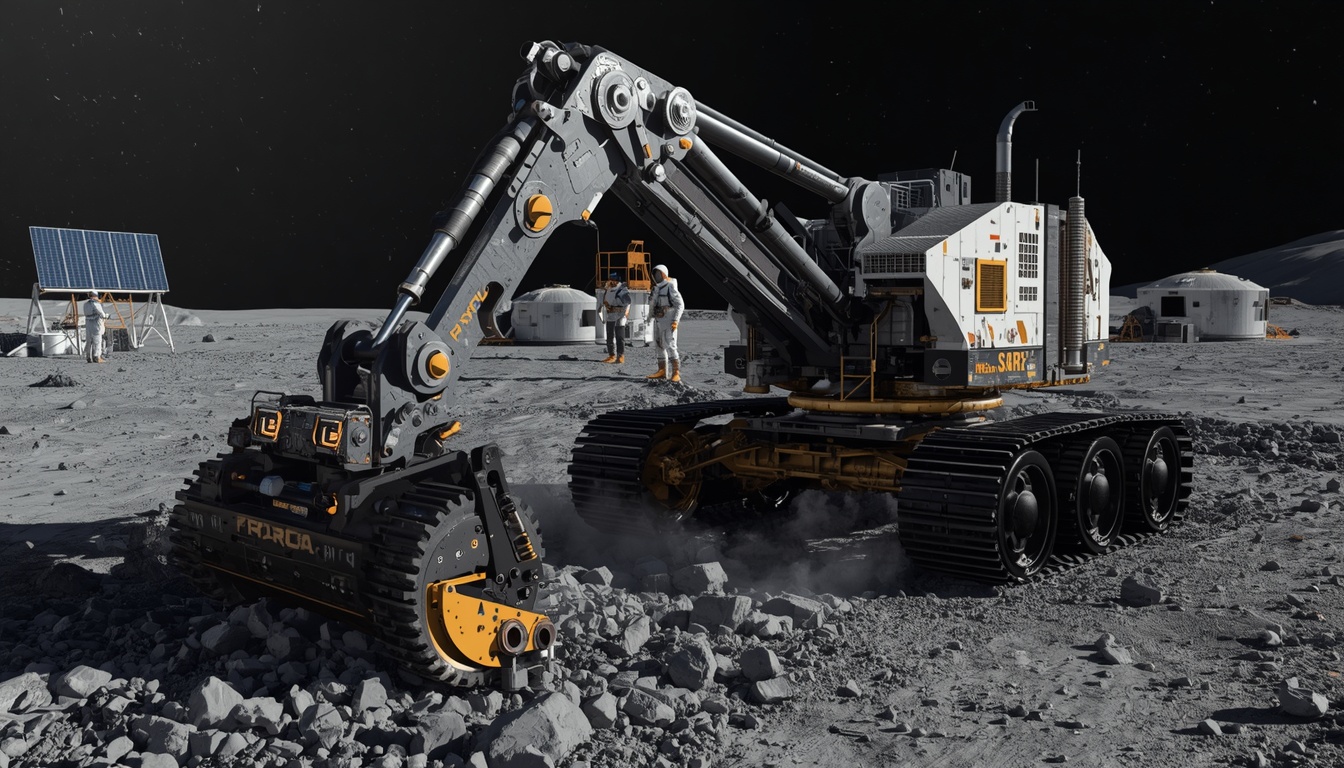
Future lunar and Martian construction will rely primarily on autonomous robotic excavators capable of continuous operation with minimal human supervision.
Several robotic concepts have been developed for planetary excavation, including:
- NASA RASSOR 2.0
- CASPER screw-propelled excavator
- LES3 (LUVMI-X)
- MoonBot modular bucket-drum excavator
- LISTER pneumatic excavation system
These systems are specifically designed to maximize excavation efficiency while minimizing reaction forces, energy consumption, and equipment wear.
Autonomous Excavation and Artificial Intelligence
Because communication delays prevent real-time teleoperation, future excavation systems must operate autonomously. Artificial intelligence, computer vision, and machine learning enable excavation robots to adapt continuously to changing soil conditions, optimize excavation paths, and minimize mechanical stress on tools.
Recent research also demonstrates that reinforcement learning algorithms can significantly improve excavation performance by dynamically adjusting excavation depth, cutting angle, and machine stiffness.
Modeling and Regolith Simulants
Planetary excavation systems are extensively tested using lunar and Martian regolith simulants before deployment. Numerical methods such as the Discrete Element Method (DEM) are widely used to predict excavation forces, particle flow, and tool-soil interaction under reduced gravity conditions.
Although simulants provide valuable engineering data, no single material perfectly reproduces the mechanical behavior of natural extraterrestrial regolith, making continued experimental validation essential.
Future Outlook
Efficient excavation technologies will play a central role in establishing sustainable human settlements beyond Earth. Advances in autonomous robotics, intelligent excavation control, regolith mechanics, and ISRU technologies will enable future lunar and Martian missions to construct infrastructure using local materials while minimizing transported equipment and operational risks.
Related Topics
- Geotechnical Site Investigation on the Moon and Mars
- Foundation Engineering for Lunar and Martian Structures
- Bearing Capacity of Lunar and Martian Regolith
- Lunar Geotechnics
- Martian Geotechnics
- What is Regolith?
- Underground Construction and Lava Tube Engineering
- Ground Improvement Techniques for Lunar and Martian Regolith