



Underground Construction and Lava Tube Engineering
Underground Construction and Lava Tube Engineering
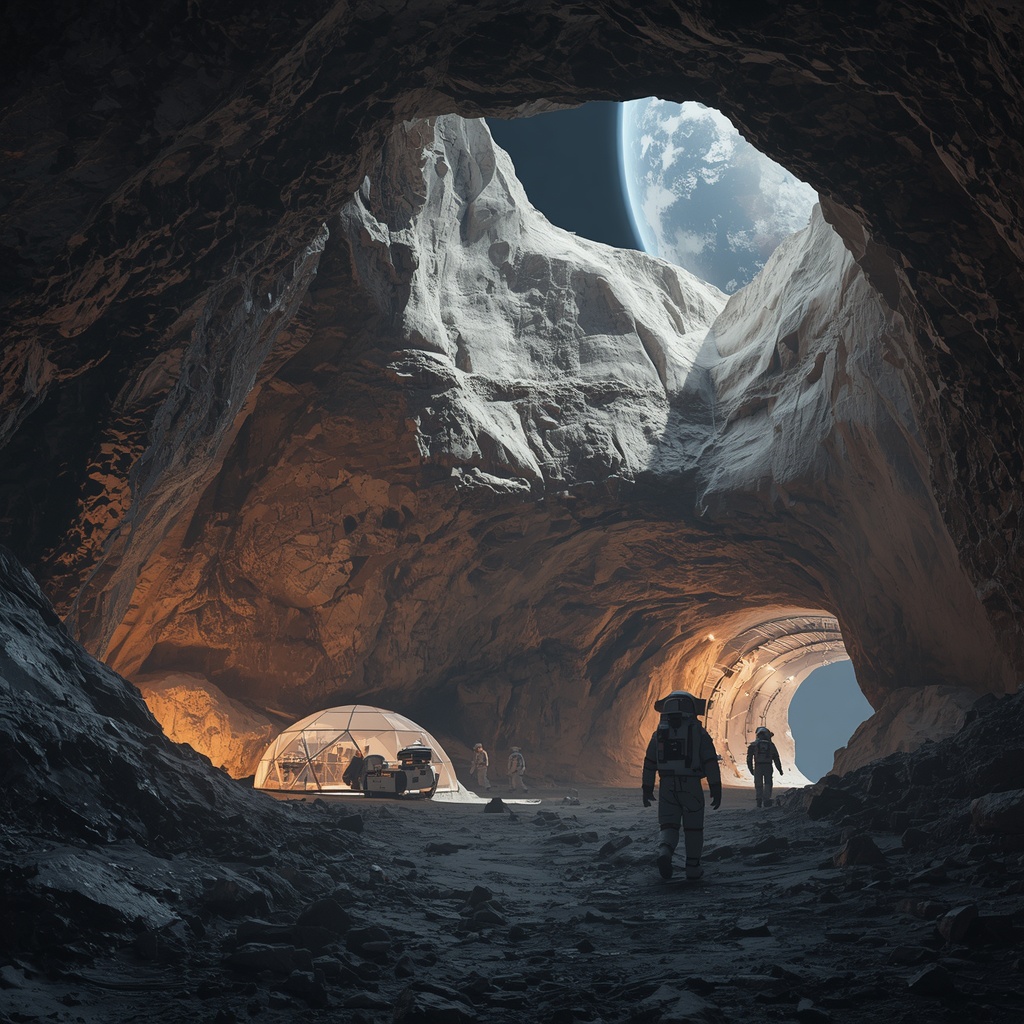
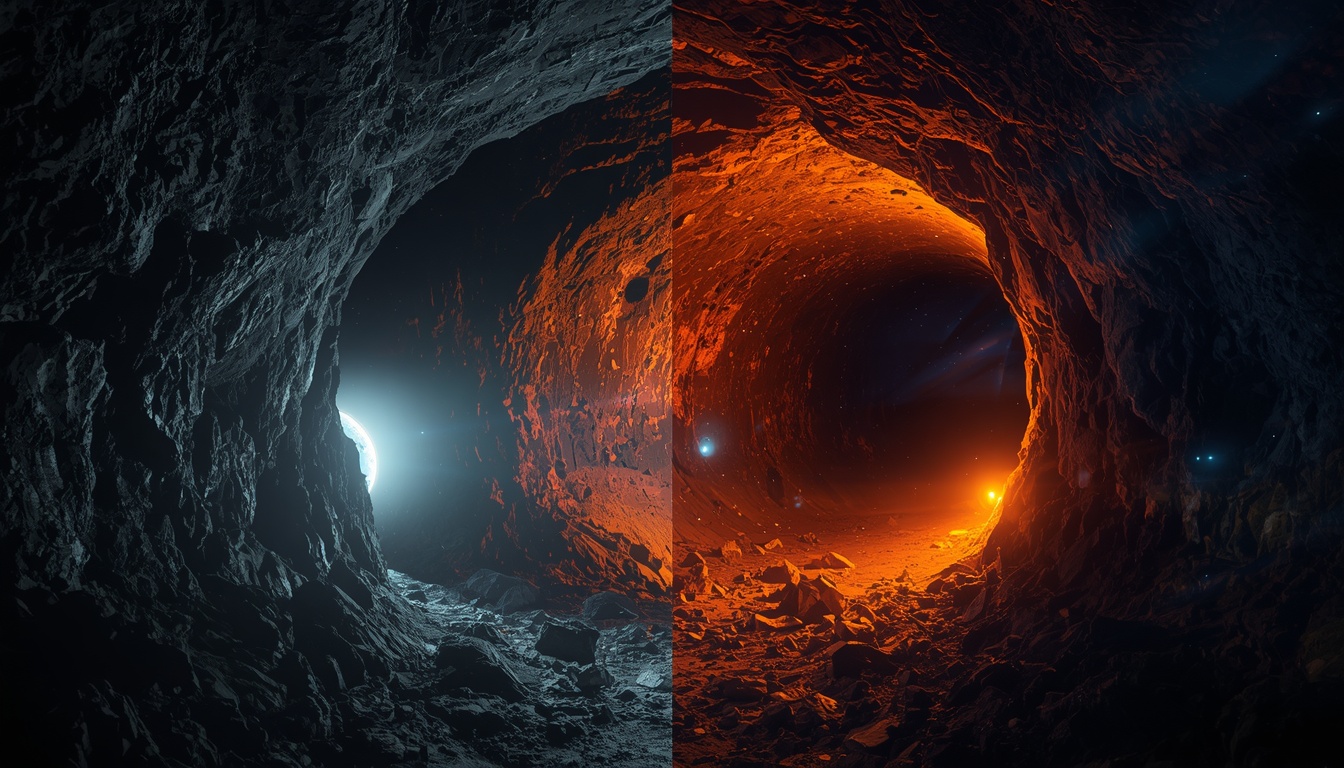
Underground construction and lava tube engineering are emerging disciplines within Space Geotechnics that focus on utilizing natural subsurface environments on the Moon and Mars for future human settlements. Lava tubes offer exceptional protection against radiation, micrometeoroids, extreme temperature fluctuations, and surface hazards, making them among the most promising locations for long-term extraterrestrial habitats.
Hundreds of candidate lava tube entrances have already been identified on the Moon and Mars. These naturally formed volcanic tunnels may significantly reduce construction costs while providing stable environments for scientific research, habitation, and industrial activities.
Why Lava Tubes Matter
Lava tubes provide natural geological shelters that eliminate many of the environmental challenges faced by surface infrastructure.
- Excellent radiation shielding
- Protection from micrometeoroid impacts
- Stable underground temperatures
- Reduced dust exposure
- Large natural construction volumes
- Lower infrastructure development costs
Structural Stability of Lava Tubes
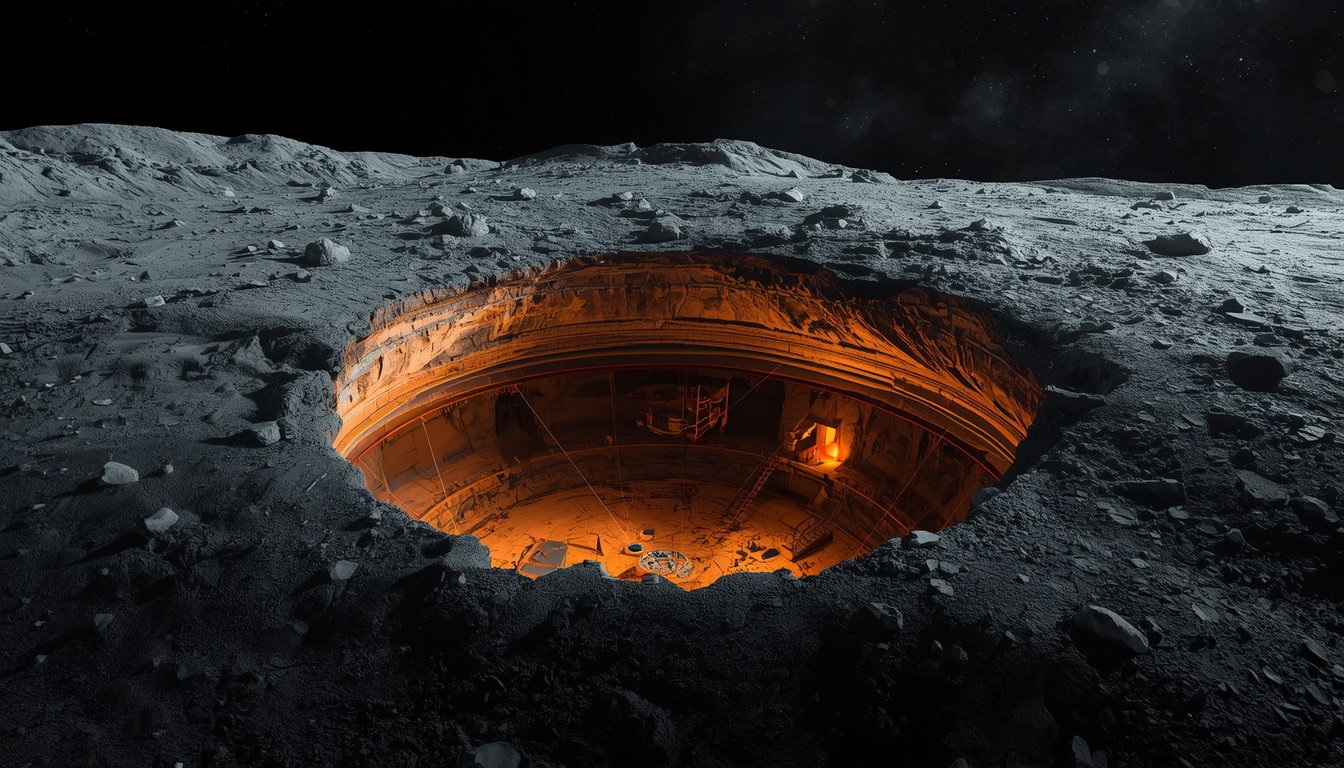
The stability of lunar and Martian lava tubes depends primarily on roof thickness, rock strength, burial depth, and the in-situ stress conditions surrounding the cavity. Numerical modeling suggests that some lunar lava tubes may remain structurally stable despite spanning several kilometers, making them suitable for future underground cities.
Finite Element Analysis (FEA), geological mapping, and geotechnical site investigations are essential for evaluating long-term stability before construction begins.
Habitat Pressurization and Sealing
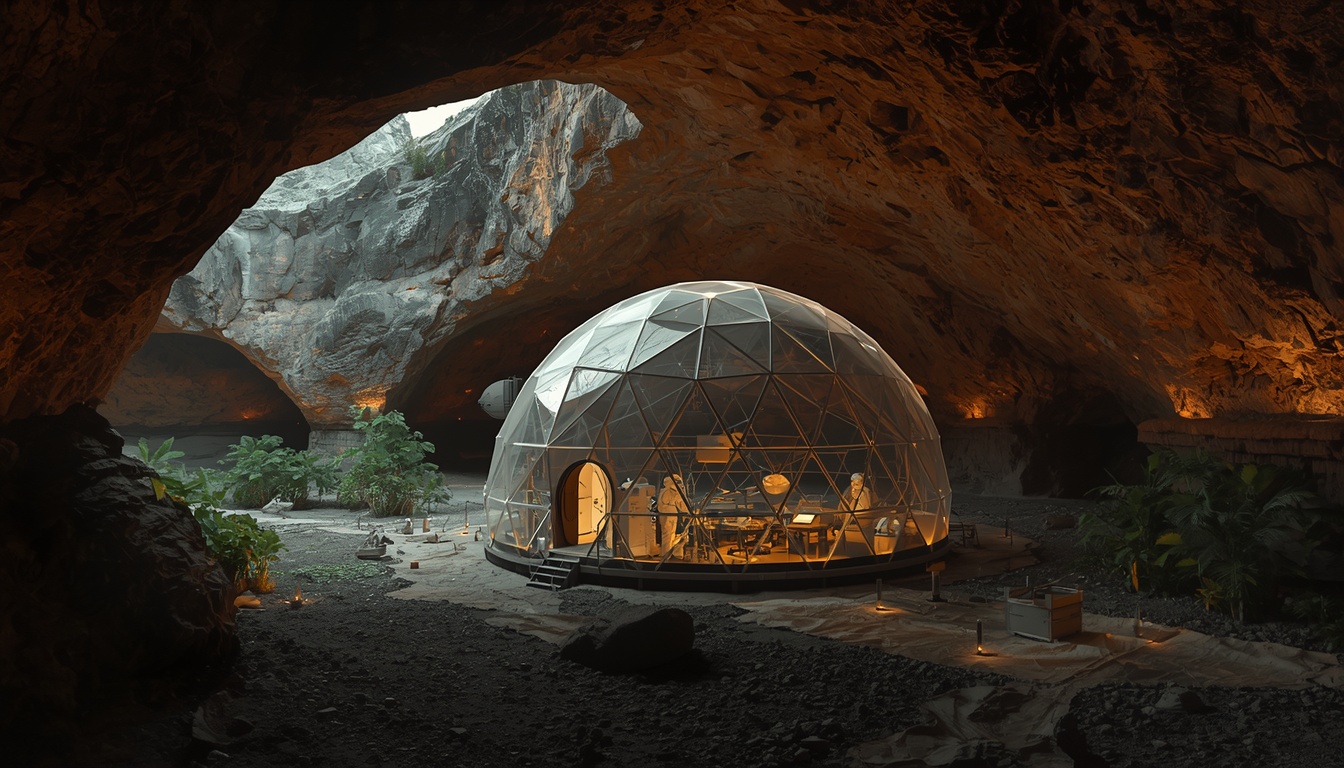
Although lava tubes naturally provide structural protection, they must be sealed and pressurized before becoming habitable environments. Current engineering concepts include inflatable membranes, ISRU-produced structural rings, geodesic support systems, and advanced composite sealing technologies.
Maintaining internal pressure while preserving structural integrity remains one of the major engineering challenges for extraterrestrial underground habitats.
Exploration Technologies
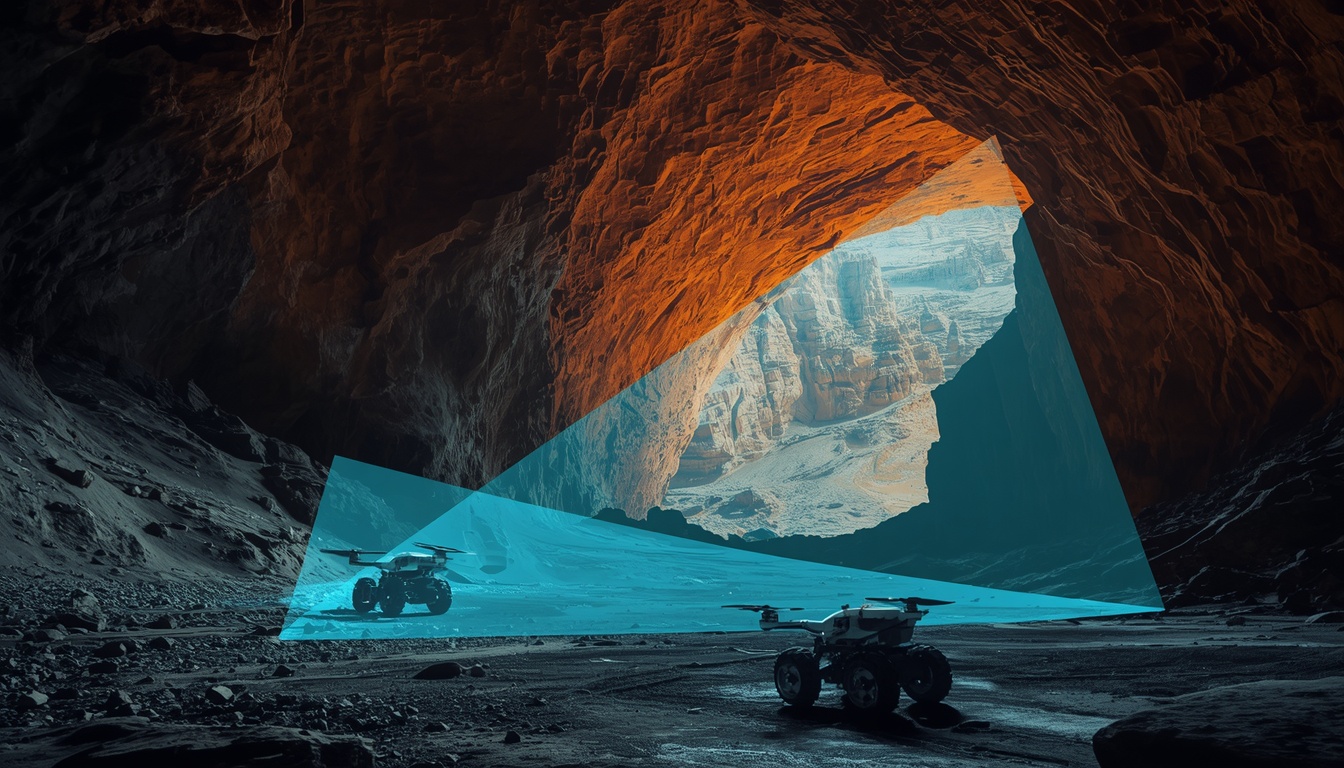
Before construction can begin, lava tubes must be accurately mapped and characterized using robotic exploration systems and geophysical investigations.
- Ground Penetrating Radar (GPR)
- LiDAR mapping
- Photogrammetry
- Autonomous cave robots
- Drone-based exploration
- 3D geological reconstruction
Engineering Challenges
Despite their advantages, lava tubes present significant engineering challenges that must be addressed before human occupation.
- Unknown geological conditions
- Rockfall hazards
- Communication limitations
- Permanent darkness
- Ventilation and life-support integration
- Habitat sealing and pressurization
Autonomous Underground Construction
Future underground construction will rely heavily on autonomous robotic systems capable of excavation, mapping, reinforcement, and habitat assembly. Artificial intelligence and robotic coordination will enable continuous construction activities before astronauts arrive.
Future Outlook
Underground construction within natural lava tubes is expected to become one of the safest and most efficient approaches for establishing permanent settlements on the Moon and Mars. Combining geotechnical engineering, robotics, ISRU technologies, and advanced structural analysis will enable the development of sustainable extraterrestrial infrastructure for future generations.
Related Topics
- Geotechnical Site Investigation on the Moon and Mars
- Foundation Engineering for Lunar and Martian Structures
- Bearing Capacity of Lunar and Martian Regolith
- Lunar Geotechnics
- Martian Geotechnics
- What is Regolith?
- Excavation and Trenching in Lunar and Martian Regolith
- Landing Pad and Surface Infrastructure Design